


How Copper Cathodes, LME Warrants and Real-World Trading Define True Copper Value
How Copper Cathodes Are Stored, Traded and Why Physical Ownership Matters
How Copper Cathodes, LME Warrants and Real-World Trading Define True Copper Value
The institutional copper market runs on 25-tonne lots of refined metal. Here is what that means for anyone serious about physical ownership.
The Real Copper Market Is Not a Ticker
Most investors encounter copper through an ETF, a mining stock, or a futures contract. None of those are the copper market. The actual copper market runs on physical cathodes, warehouse warrants, and standardised lots traded between banks, commodity houses, and industrial buyers. Understanding that distinction matters if you want genuine exposure to the metal rather than a financial instrument built around it.
This guide covers the mechanics: what copper cathodes are, how they are stored globally, what an LME warrant represents, why the 25 metric tonne lot size exists, how major financial institutions trade the metal, and where a buyer starting with 10 kg fits into that structure.
What Is a Copper Cathode?
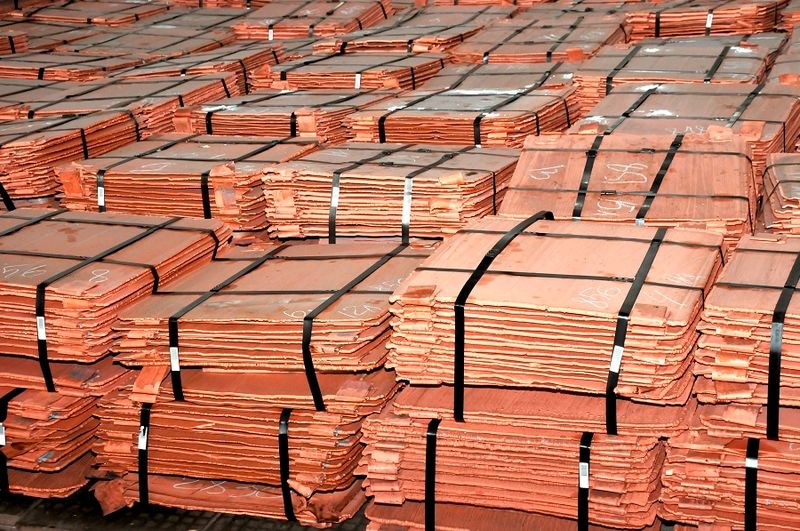
A copper cathode is the standard refined form of the metal. Production follows three stages: mining the ore, smelting it into blister copper, and electrorefining it into 99.99% pure sheets. The result is a flat copper plate that typically weighs between 100 and 125 kg per sheet. Cathodes are bundled, weighed, certified, and delivered into professional storage facilities before being traded in metric tonnes.
This is the copper that goes into electrical wiring, high-voltage transmission lines, electric vehicle motors, renewable energy systems, and data centre infrastructure. When a manufacturer needs copper, they buy cathodes. Not ETF units.
LME Grade A copper cathodes must meet a minimum purity of 99.99%. This specification is the international benchmark used by manufacturers, commodity traders, and financial institutions worldwide. When a price is quoted on the London Metal Exchange, it refers specifically to LME Grade A cathodes.
How Physical Copper Is Stored Globally
Physical copper sits in professional metal warehouses positioned at major global trade hubs: Rotterdam, Singapore, Shanghai, Busan, and New Orleans are among the most active locations. Many of these facilities carry approval from the London Metal Exchange, which means the copper held there meets defined quality and handling standards.
LME approval is not merely a certification. It means the copper stored in that facility can be registered as an LME warrant, giving it full standing in institutional trading. Copper held outside approved warehouses sits outside the core benchmark trading system, which affects pricing, liquidity, and transferability.
"When copper changes hands at scale, it often does so via warrant transfer rather than by moving trucks around the world."
C4CU Research Team, 2026
What Is an LME Copper Warrant?
An LME warrant is a document of title. It represents ownership of a specific quantity of copper cathodes stored in an LME-approved warehouse, meeting strict quality standards. The warrant confirms: this metal exists, it is here, it meets specification, and this party owns it.
A full LME copper warrant represents 25 metric tonnes (25 MT) of copper cathodes. The global institutional copper market is structured around this unit. Banks, commodity trading houses, and industrial participants transact in standardised 25 MT lots because this is the building block of global copper trade. Physical delivery and price settlement at the LME operates on this basis.
The 25 MT unit also explains why physical copper ownership has historically been inaccessible to retail participants. At around USD 9,000 per tonne [VERIFY current price], a single full warrant represents approximately USD 225,000 of copper. That threshold has kept individual buyers out of the real market entirely.
How Copper Is Priced in the Real World
The copper price that appears on financial terminals is the LME 3-Month or Cash price. That figure acts as the global benchmark. But the actual price a buyer pays in the physical market has additional components: a regional premium reflecting local availability, shipping constraints, and current demand conditions, plus logistics and financing adjustments.
The premium structure is important. It means physical copper pricing reflects real-world supply and demand conditions rather than the sentiment cycles of retail financial markets. When supply tightens in a specific region, the premium rises. When warehouse stocks build, it compresses. This is the mechanism through which physical inventory drives price discovery.
LME Benchmark Price (global reference) + Regional Premium (location and availability) + Logistics and Financing Adjustments = physical copper price paid by buyers. The LME price is the floor. The premium is the market's real-time verdict on physical scarcity.
How Banks Trade Copper: Cathodes, Not ETFs
Major financial institutions and commodity houses participate directly in the physical copper market. Historically active participants include JPMorgan Chase, Goldman Sachs, Morgan Stanley, Glencore, and Trafigura. When these organisations take copper positions at scale, they primarily trade physical cathodes, warehouse warrants, structured physical offtake agreements, and forward contracts tied to physical delivery.
This is not incidental. The physical market is where price discovery happens. The institutional copper market is built around 25 MT warrant units. That is where global pricing converges. That is where copper clears. Retail ETFs and financial instruments take their reference prices from this market but do not participate in it directly.
Understanding this matters for anyone thinking about copper exposure. If the benchmark is set in the physical market, and you hold a financial instrument referencing that benchmark, you are one step removed from the asset doing the pricing work.
Why Physical Copper Offers the Purest Exposure
Different forms of copper exposure carry different layers of intermediary risk. Each layer introduces something that is not copper.
| Exposure Type | What You Actually Hold | Key Risk Layer |
|---|---|---|
| Copper ETF | Futures contracts or synthetic exposure | Roll costs, futures curve structure, liquidity cycles |
| Mining Stock | Equity in a company that mines copper | Management decisions, cost overruns, political risk |
| Futures Contract | Derivative with obligation to settle | Margin requirements, expiry dates, rollover costs |
| Physical Copper Cathodes | The refined metal itself | Storage and insurance costs; price volatility of the metal |
Physical cathodes remove management decisions, cost overruns, political risk, equity sentiment, derivative roll costs, market flows, and liquidity cycles from the equation. What remains is the metal itself, which is exactly how institutions participate.
The Structural Copper Demand Story
The International Energy Agency projects that global electrification and renewable energy expansion will drive sustained copper demand growth through the coming decades. The drivers are structural rather than cyclical: EV adoption, grid upgrades, renewable energy infrastructure, AI-driven data centre expansion, and continued urbanisation across emerging markets.
Supply faces its own structural constraints. New copper mines take more than ten years to develop from discovery to production, face complex permitting processes, require substantial capital, and are increasingly working with declining ore grades. This supply-demand dynamic plays out in the physical copper market first, in the form of warrant balances, regional premiums, and warehouse inventory levels.
"The real supply-demand equilibrium happens at the 25 MT physical level. That is where price discovery is anchored. That is where institutional capital operates."
C4CU Research Team, 2026
Where C4CU Fits into the Physical Copper Ecosystem
Physical copper ownership has historically been restricted to industrial buyers, commodity traders, banks, and large-scale institutional participants. The minimum entry point aligned with full LME warrant sizes: 25 metric tonnes per unit. For most individuals, that threshold has been prohibitive.
Cooper 4 Copper was created to bridge that gap. C4CU offers direct physical copper allocation with professional storage, alignment with real-world commodity standards, and entry from 10 kg. The copper is LME Grade A, allocated in the buyer's name, stored in insured professional facilities, and never rehypothecated. One all-inclusive fee of 5% covers sourcing, storage, insurance, and management. No hidden costs.
As Cooper Koten explains: "If you want to understand copper properly, you have to understand cathodes and warrants. That is how banks trade. That is how the market clears. Physical copper is the foundation." C4CU aligns with the physical copper structure rather than replicating a financial derivative wrapper around it.
Frequently Asked Questions
Q: What is an LME copper warrant and what does it represent?
An LME copper warrant is a document of title representing ownership of a specific quantity of copper cathodes stored in an LME-approved warehouse. A full warrant equals 25 metric tonnes of copper meeting minimum 99.99% purity (LME Grade A). Warrant transfer is the primary mechanism through which institutional copper changes hands globally, without physically moving the metal.
Q: Why do banks and institutions trade copper in 25-tonne lots?
The 25 MT lot is the standardised unit of the London Metal Exchange, the world's primary benchmark for base metal pricing. Banks including JPMorgan Chase, Goldman Sachs, and commodity houses such as Glencore and Trafigura transact in these units because they align with LME settlement, warehouse warrant structures, and the physical volumes that industrial buyers actually require. Standardisation reduces friction in a global market and anchors price discovery to deliverable physical inventory.
Q: Does a copper ETF actually hold physical copper?
Most copper ETFs do not hold physical copper. They typically hold futures contracts, which are derivatives providing price exposure rather than ownership of the metal. This creates roll costs when contracts expire, exposure to the futures curve structure, and returns that can diverge from spot copper prices over time. Physical copper ETFs backed by allocated metal exist but remain relatively uncommon compared to the futures-based equivalents. Always check the prospectus to understand what a specific fund actually holds.
Q: What are the risks of holding physical copper compared to a copper ETF?
Physical copper carries storage and insurance costs, and the price is volatile: it can go down as well as up. It is also less liquid than a publicly traded ETF, meaning selling may take longer to execute. However, physical copper removes derivative roll costs, counterparty risk from futures positions, and the equity-related risks of mining stocks. The trade-off is direct metal exposure versus financial instrument convenience. Past performance is not an indicator of future results.
Q: What is the minimum amount of copper I can buy as an individual?
The institutional minimum on the London Metal Exchange is one full warrant: 25 metric tonnes, worth roughly USD 225,000 at current prices [VERIFY]. That threshold has historically excluded retail buyers from the physical copper market entirely. C4CU reduces the entry point to 10 kg of LME Grade A copper cathode, allocated in the buyer's name and stored in insured professional facilities, with an all-inclusive fee of 5% covering storage, insurance, and management.
Q: How do I own physical copper without storing it myself?
Professional allocated storage is the standard approach used by both institutions and individuals. The copper is held in an insured, audited facility; the buyer holds title without needing to manage the physical metal. C4CU provides this arrangement from 10 kg: the copper is allocated in the buyer's name, stored in professional facilities, fully insured, and never rehypothecated (not lent out or used for other purposes). The buyer can sell back through the platform when they choose.
Ready to Own Physical Copper?
Start with as little as 10 kg of LME Grade A copper cathode, stored, insured, and allocated in your name.
Start Owning Copper →
Get Copper Market Updates
Join investors receiving insights on copper prices, market trends, and opportunities. Free, no spam.
By subscribing, you agree to our Privacy Policy.
Ready to Own Real Copper?
Start owning physical copper today. Simple, transparent, accessible.