


How Copper Powers the Future ... Just as It Powered the Past
The Ultimate 2026 Guide to Copper’s Role in Civilisation, Infrastructure, and Physical Investment
How Copper Powers the Future, Just as It Powered the Past
The 2026 guide to copper's role in civilisation, infrastructure, and why the physical metal still matters most.
Remove Copper from Civilisation and Everything Stops
If copper were removed from modern civilisation tomorrow, the world would not slow down. It would stop. Lights would go out. Power grids would fail. Electric vehicles would stall. Data centres would overheat. Industrial systems would grind to a halt.
Copper is not a commodity in the way most people think about commodities. It is not a bet on a cycle. It is not a hedge against a single macro trend. It is the physical substrate of electrification itself: the metal that moves electricity from source to use, at every scale, in every era.
As the world accelerates into a new phase of electrification, the supply picture is tightening. Understanding that dynamic, and what it means to own the real metal rather than a paper proxy, starts with understanding copper's unbroken role across human history.
Copper in Human History: The First Industrial Metal
Around 8000 BCE, early societies began working native copper into tools and ornaments. Unlike iron, copper could be shaped without advanced furnaces. It was the first metal humans could manipulate, and that single capability unlocked a cascade of technological progress.
When humans learned to alloy copper with tin, the Bronze Age began. Stronger tools and weapons transformed agriculture, trade, warfare, and governance. Entire civilisations expanded because copper-based metallurgy gave them the means to do so. The metal did not just support civilisation. It enabled it.
The Romans extended that logic at scale. They used copper extensively in plumbing, coinage, architecture, and naval engineering. The word "copper" itself derives from Cyprium aes, meaning "metal of Cyprus," one of the empire's primary sources. Even in antiquity, copper functioned as infrastructure.
"The word copper derives from Cyprium aes, the metal of Cyprus. Even in antiquity, copper was infrastructure."
Historical etymology
The Industrial Revolution and the Age of Electrification
When steam engines and mechanisation began scaling in the 18th century, copper's thermal conductivity and corrosion resistance made it essential for boilers, shipbuilding, industrial machinery, and early telegraph systems. But electricity is where copper became truly irreplaceable.
Copper possesses a combination of properties that no other widely available material matches: exceptional electrical conductivity (second only to silver), high thermal conductivity, corrosion resistance, and mechanical flexibility. When electricity became mainstream in the late 19th and early 20th centuries, copper became the primary conductor material globally. Every power plant, transformer, distribution grid, and residential wiring system was built with it. The electrical age was, by necessity, a copper age.
Copper's atomic structure gives it a single free electron per atom, making it exceptionally efficient at carrying electrical current. Silver is marginally better, but copper's relative abundance and much lower cost make it the universal conductor of choice for infrastructure at every scale.
Copper in 2026: The Foundation of the Next Electrification Wave
The 21st century is witnessing another infrastructure transformation, and copper sits at the centre of it again. According to the International Energy Agency, global electrification and renewable energy expansion are expected to significantly increase copper demand over coming decades. The reason is mechanical: electrification requires conductive metal, and copper remains the most efficient large-scale conductor available.
Power grid expansion: Modern power grids require high-voltage transmission lines, substations, transformers, and distribution networks, each consuming substantial quantities of copper. As emerging economies urbanise and developed economies modernise ageing grids, copper demand scales structurally.
Renewable energy infrastructure: Renewable energy systems are more copper-intensive than traditional fossil fuel systems. Wind turbines require copper windings, cabling, and grounding systems. Solar farms require inverters, cabling, and grid connections. Every unit of renewable capacity installed translates directly into copper demand. That is not a forecast. It is physics.
Electric Vehicles: Copper Demand Built Into Every Sale
Electric vehicles contain significantly more copper than internal combustion engine vehicles. Copper appears in electric motors, battery systems, power electronics, charging infrastructure, and the wiring harnesses that connect all of it. Industry estimates suggest a typical battery EV contains 80 to 100 kg of copper, roughly four times the amount in a conventional petrol car (Copper Development Association).
As EV penetration increases globally, copper demand increases in proportion. This is not a speculative thesis. It is a mechanical consequence of how EVs are built. Every new electric vehicle sold adds another slug of copper demand to the market.
"A typical battery electric vehicle contains 80 to 100 kg of copper, roughly four times the amount in a conventional petrol car."
Copper Development Association
AI Infrastructure: The Metal Behind the Digital Future
Artificial intelligence is digital. AI infrastructure is entirely physical. Data centres require power distribution systems, cooling infrastructure, backup power, and transformers. All of these depend on copper. As AI workloads scale, electricity demand grows. As electricity demand grows, copper demand grows with it.
The chain of dependencies is direct: no copper, no computation. Every AI query, every model training run, every cloud workload passes through copper at some point in its electrical journey. The digital economy, despite its immaterial appearance, is built on physical metal.
AI expansion requires more data centres. Data centres require more electricity. More electricity requires more copper in transmission lines, transformers, and building systems. The relationship is not speculative: it is baked into the physical architecture of how computing works.
Structural Supply Constraints: Why the Market Cannot Simply Produce More
Copper supply cannot be expanded quickly. Developing a new copper mine typically requires more than ten years, significant capital, environmental approvals, and substantial infrastructure development. Ore grades are declining globally: the average copper ore grade mined today is a fraction of what it was a century ago, meaning more rock must be processed to extract the same amount of metal.
Permitting timelines are lengthening in many jurisdictions. Capital cycles mean that periods of lower prices reduce exploration investment, creating supply gaps that take years to close. The result is a structural tension between rising demand driven by electrification and a supply side that moves slowly and expensively.
The Real Copper Market: Cathodes, Not Tickers
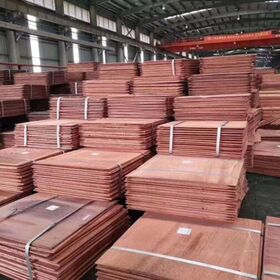
Most retail participants encounter copper through mining stocks, ETFs, or futures contracts. These are financial instruments. They track copper prices, but they do not represent ownership of copper. The real copper market centres on refined copper cathodes: 99.99% pure, standardised, deliverable metal stored in professional warehouses.
Copper stored in LME-approved warehouses can be registered as warrants. A full LME copper warrant represents 25 metric tonnes of copper cathodes. This is the standardised building block of global copper liquidity. Major institutions, including JPMorgan Chase, Goldman Sachs, Glencore, and Trafigura, trade physical cathodes and warehouse warrants at this scale. That is how the physical copper market functions at the institutional level.
Physical Copper vs Copper ETFs: What You Actually Own
| Copper ETF | Physical Copper Cathodes |
|---|---|
| Financial instrument tracking copper price | Allocated real metal in your name |
| Subject to derivative roll costs | LME Grade A standard, 99.99% pure |
| Counterparty and market sentiment risk | Stored in professional warehouses, insured |
| No physical deliverability for retail holders | Industrial-grade, deliverable asset |
| Cannot be held outside the financial system | Exists independently of financial markets |
How C4CU Bridges the Gap Between Institutional Markets and Individual Ownership
Historically, physical copper ownership required institutional scale: the standard LME unit is 25 metric tonnes. For most individuals, direct access to the physical copper market was simply not possible. C4CU (Cooper 4 Copper) changes that by providing direct physical copper allocation, professional storage aligned with LME standards, and entry points starting at 10 kilograms.
The structure is straightforward. You own the metal. It is stored and insured in your name. There are no financial intermediaries, no derivative exposure, and no counterparty risk of the kind embedded in paper copper products. Copper's value sits in cathodes and warrants. That is how the institutional market functions, and now that access is available at a smaller scale.
From the Bronze Age to the Roman Empire to the electrical grid to AI data centres, copper has been the constant. The metal that powered each previous era of civilisation is the same metal required by every technology defining the next one.
Frequently Asked Questions
Q: Why is copper so important to the global economy?
Copper is the primary conductor used in virtually all electrical systems: power grids, motors, transformers, wiring, and electronics. Its combination of electrical conductivity, thermal conductivity, corrosion resistance, and mechanical flexibility has no cost-effective substitute at infrastructure scale. The International Energy Agency projects copper demand will increase substantially through 2040 as electrification accelerates globally. Without copper, modern electricity infrastructure cannot be built or maintained.
Q: How much copper does an electric vehicle use compared to a normal car?
A conventional petrol or diesel car contains approximately 20 to 25 kg of copper. A battery electric vehicle contains 80 to 100 kg, roughly four times as much, according to the Copper Development Association. That copper goes into the electric motor, battery pack, power electronics, and wiring systems. Plug-in hybrid vehicles sit in between at around 40 to 60 kg. As global EV sales grow, this multiplier effect feeds directly into structural copper demand.
Q: Is there really a copper supply shortage coming, or is that just hype?
The supply constraint case is structural, not speculative. New copper mines take ten or more years from discovery to production. Global ore grades are declining: the average grade of copper ore mined today is significantly lower than in previous decades, meaning more material must be processed per tonne of copper produced. The International Energy Agency, Goldman Sachs, and S&P Global have all published analysis projecting supply deficits under various demand scenarios tied to electrification. The price of copper is volatile and can go down as well as up, but the underlying supply dynamics are well-documented. [VERIFY: specific deficit figures from current IEA or S&P Global reports]
Q: What is an LME copper warrant and why does it matter?
An LME (London Metal Exchange) copper warrant is a document of title representing ownership of a specific quantity of copper cathodes stored in an LME-approved warehouse. A single full warrant covers 25 metric tonnes of copper. Warrants are the unit in which major institutions, including commodity trading houses such as Glencore and Trafigura and investment banks including JPMorgan and Goldman Sachs, transact in the physical copper market. They represent deliverable, allocated metal rather than a financial contract.
Q: What is the difference between a copper ETF and owning physical copper?
A copper ETF is a financial instrument that tracks the copper price. It does not provide ownership of actual metal. ETFs are subject to derivative roll costs (the expense of rolling futures contracts forward), counterparty risk, and market sentiment cycles. Physical copper, held as allocated cathodes, represents direct ownership of real metal independent of the financial system. In volatile markets, the distinction between a paper claim on copper and actual copper matters considerably.
Q: Can private individuals buy physical copper cathodes, or is that only for institutions?
The institutional copper market operates in 25-tonne LME warrant units, which has historically made direct physical copper ownership impractical for most individuals. C4CU (Cooper 4 Copper), operated by A42C Ltd, offers direct ownership of LME Grade A copper cathodes starting at 10 kilograms, with professional storage and insurance included. The metal is allocated in the buyer's name and stored in line with LME standards. This structure provides access to the physical copper market without requiring institutional scale.
Ready to Own Physical Copper?
Start with as little as 10 kg of LME Grade A copper cathode: stored, insured, and allocated in your name.
Start Owning Copper →
Get Copper Market Updates
Join investors receiving insights on copper prices, market trends, and opportunities. Free, no spam.
By subscribing, you agree to our Privacy Policy.
Ready to Own Real Copper?
Start owning physical copper today. Simple, transparent, accessible.