


Is Copper a Good Investment in 2026? Outlook, Risks & Market Trends
Copper is increasingly viewed as a strong long-term investment in 2026 due to rising demand from electrification, infrastructure, and technology. At the same time, supply constraints and long mine development timelines create potential pressure on the market. While opportunities exist, investors must also consider risks such as economic slowdowns and market volatility.
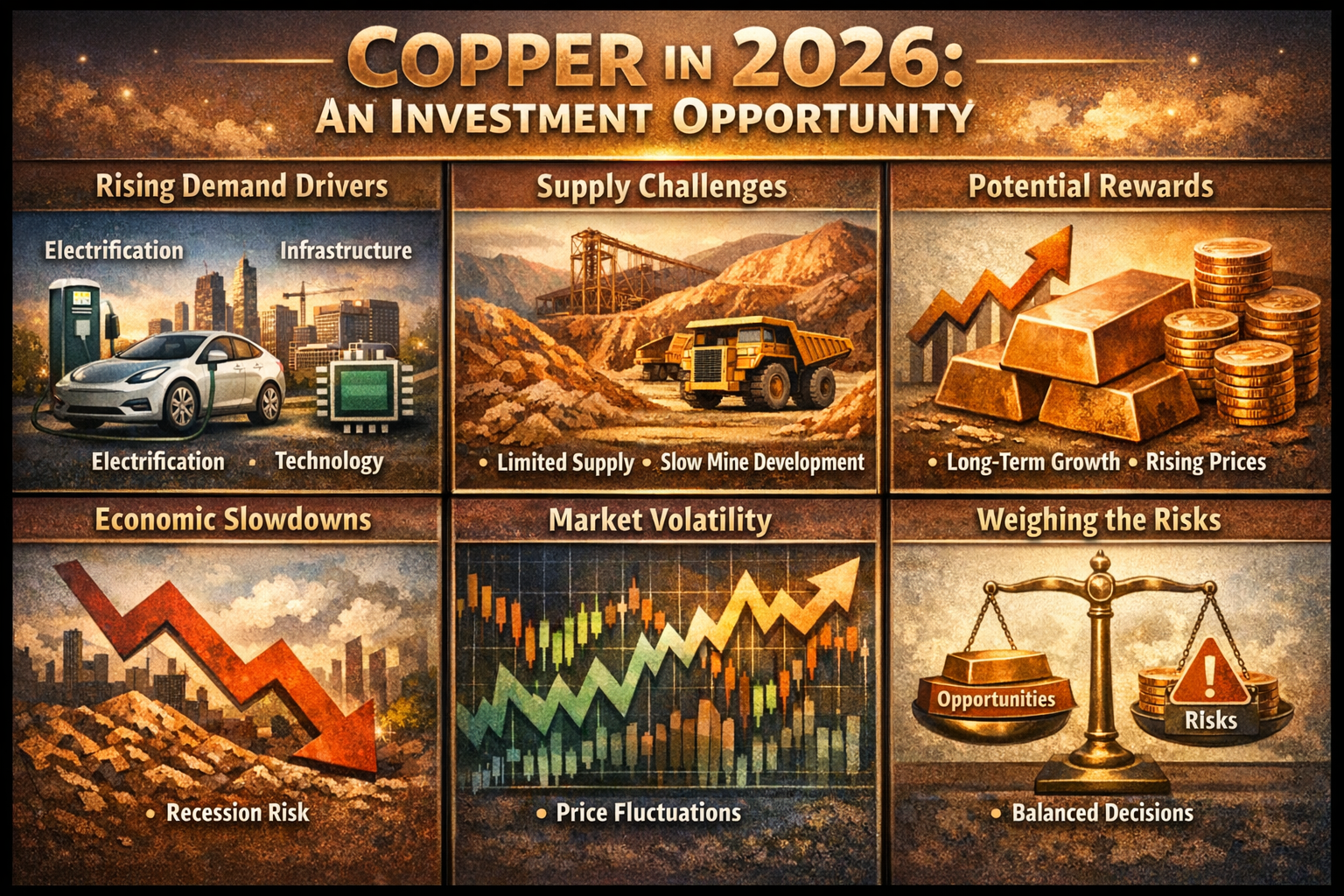
Is Copper a Good Investment in 2026?
Copper is increasingly being discussed as one of the most important commodities in the global economy.
With demand rising from electrification, infrastructure, renewable energy, and artificial intelligence, many investors are asking:
Is copper a good investment in 2026?
The answer depends on understanding both the opportunities and risks shaping the copper market.
The Bull Case for Copper in 2026
1. Rising Global Demand
Copper demand continues to grow due to:
Electric vehicles (EVs)
Renewable energy systems
Power grid expansion
Data centres and AI infrastructure
These are long-term structural trends, not short-term cycles.
2. Supply Constraints
Copper supply remains limited by:
15–20 year mine development timelines
Declining ore grades
Regulatory and environmental challenges
This creates the potential for a copper supply shortage, especially as demand increases.
3. Structural Demand vs Supply Imbalance
The relationship between copper demand vs supply is one of the most important drivers of the market.
Demand is increasing
Supply is slow to respond
This creates pressure that can influence long-term pricing.
The Bear Case: Risks to Consider
1. Economic Slowdowns
Copper demand is tied to economic activity.
If global growth slows:
Construction may decline
Industrial demand may weaken
This can impact copper prices in the short term.
2. Market Volatility
Copper prices can fluctuate due to:
Financial markets
Currency movements
Speculative trading
3. Policy and Regulation
Changes in:
Mining regulations
Environmental policies
Trade restrictions
can affect supply and pricing.
Copper Investment in the UK and Globally
In the UK, investors can access copper through:
ETFs
Mining stocks
Physical copper platforms
In countries experiencing inflation or currency instability, such as:
Argentina
Turkey
Lebanon
Nigeria
Egypt
Pakistan
Venezuela
Zimbabwe
copper is often considered alongside other assets for:
inflation hedging
currency protection
diversification
Because copper is priced globally via the London Metal Exchange (LME), it is not directly tied to local currency performance.
How Investors Are Gaining Exposure to Copper
There are three main ways:
ETFs (price exposure)
Mining stocks (company exposure)
Physical copper (direct exposure)
For a full breakdown, see:
how to invest in copper: physical vs ETFs vs mining stocks
Access to Physical Copper
Historically, access to copper has been limited.
Today, platforms such as:
C4CU (Copper 4 Copper / Cooper for Copper)
are enabling smaller allocations of LME-grade copper, improving access to the physical market.
Copper vs Gold in 2026
Some investors compare copper to gold.
Gold → traditional hedge
Copper → industrial growth asset
See:
copper vs gold: which is the better inflation hedge
What to Watch in 2026
Key factors include:
Global economic growth
EV adoption rates
Renewable energy expansion
Copper supply developments
LME inventory levels
These will shape the market outlook.
Frequently Asked Questions
Is copper a good investment in 2026?
Copper is considered by many to be a strong long-term asset due to rising demand and constrained supply, though risks remain.
Will copper prices rise in 2026?
Prices depend on supply, demand, and economic conditions, but structural trends may create upward pressure over time.
Is copper better than gold in 2026?
Copper and gold serve different roles — copper reflects growth, while gold acts as a monetary hedge.
How can I invest in copper in the UK?
Investors in the UK can use ETFs, mining stocks, or platforms offering physical copper exposure.
What risks affect copper investment?
Risks include economic slowdowns, market volatility, and regulatory changes.
Final Thoughts
Copper is increasingly positioned at the centre of global economic transformation.
As demand rises across electrification, infrastructure, and technology, and supply remains constrained, copper is gaining attention as a strategic asset.
For investors in 2026, the key is understanding both the opportunities and the risks.

Get Copper Market Updates
Join investors receiving insights on copper prices, market trends, and opportunities. Free, no spam.
By subscribing, you agree to our Privacy Policy.
Ready to Own Real Copper?
Start owning physical copper today. Simple, transparent, accessible.