


Is There a Copper Deficit Coming? Forecasts, Supply Risks & Future Outlook
A copper deficit occurs when global demand exceeds supply, and many analysts believe this could become a reality as demand continues to rise. Structural factors such as electrification, renewable energy, and infrastructure growth are increasing demand, while supply remains constrained by long development timelines. As a result, copper is increasingly viewed as a strategic resource with growing importance in the global economy.
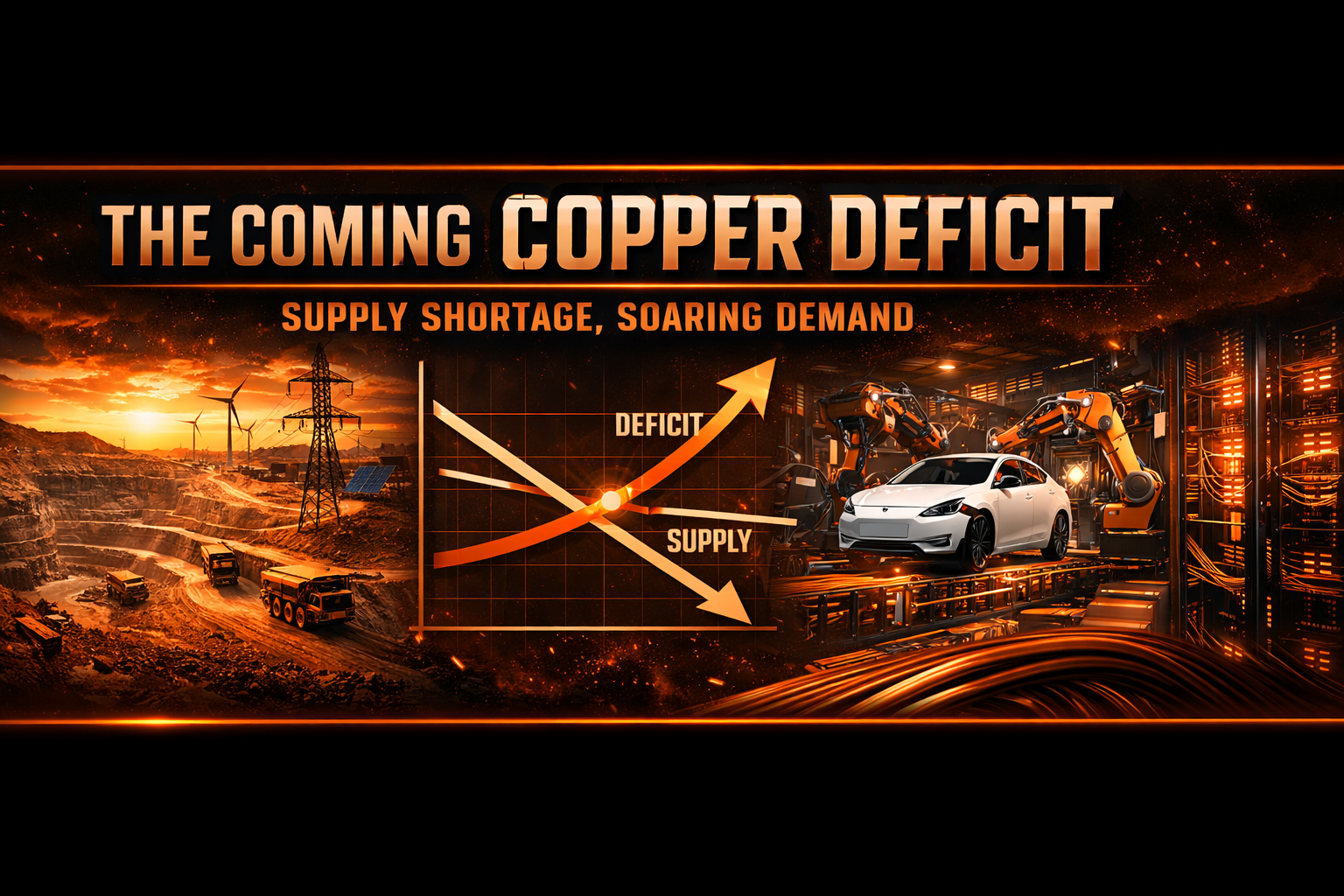
Is There a Copper Deficit Coming?
The global copper market is entering a period of increasing attention.
As demand continues to rise and supply struggles to keep pace, many analysts are asking:
Is a copper deficit coming?
A copper deficit occurs when demand exceeds supply, creating pressure on availability and pricing.
With major global trends accelerating copper usage, the possibility of a long-term copper shortage is becoming a central topic in the commodities market.
What Is a Copper Deficit?
A copper deficit happens when:
Global demand for copper exceeds available supply
Production cannot meet consumption needs
Inventories begin to decline
This creates pressure on:
Physical availability
Industrial supply chains
Long-term pricing
Why Analysts Are Warning About a Copper Shortage
1. Rising Global Demand
Copper demand is increasing due to:
Electrification
Renewable energy
Electric vehicles
Data centres and AI
Infrastructure expansion
As discussed in why copper demand is rising, these structural drivers are long-term.
2. Slow Supply Growth
Copper supply cannot respond quickly.
Key reasons include:
15–20 year mine development timelines
Declining ore grades
Regulatory and environmental constraints
Limited new discoveries
This is why supply growth remains constrained even as demand rises.
3. Lack of New Copper Projects
The pipeline of new copper projects is limited.
This creates a gap between:
Future demand expectations
Available future supply
Copper Deficit Forecasts
Many industry analysts and institutions have projected potential copper deficits over the coming decade.
While exact numbers vary, the overall trend is consistent:
Demand is expected to outpace supply
This has led to increasing focus on:
Long-term copper availability
Strategic importance of copper
Investment interest in the metal
Copper Deficit in Emerging Markets
In emerging and developing economies, copper demand is accelerating due to:
Urbanisation
Infrastructure development
Energy expansion
Countries such as:
India
Brazil
Indonesia
Nigeria
Egypt
are increasing their demand for electricity and infrastructure, which requires copper.
At the same time, in countries experiencing currency instability, including:
Argentina
Turkey
Lebanon
Pakistan
Venezuela
Zimbabwe
investors are increasingly looking toward:
commodities
hard assets
globally priced metals
Because copper is priced via the London Metal Exchange (LME), it is not tied to local currency performance, making it relevant for inflation hedging and purchasing power protection.
What Happens If a Copper Deficit Occurs?
If a copper deficit develops, several outcomes are possible:
Tightening of physical copper supply
Increased competition among industrial buyers
Higher long-term pricing pressure
Greater strategic importance of copper
However, copper markets typically move gradually rather than suddenly.
Structural shortages in industrial metals tend to build over time.
Copper as a Strategic Resource
Copper is becoming increasingly important due to its role in:
Energy systems
Infrastructure
Technology
Global economic growth
This has led to copper being viewed not just as a commodity, but as a strategic resource.
The Physical Market Perspective
Understanding the deficit requires understanding how copper is traded.
Copper moves through:
Warehouse systems
Physical supply chains
LME warrants
We explain this further in how the physical copper market works (LME, warehouses, warrants explained).
Copper Deficit and Investment
As concerns around supply increase, investors are exploring exposure to copper.
Options include:
ETFs
Mining stocks
Physical copper
See how to invest in copper: physical vs ETFs vs mining stocks for a full breakdown.
Access to Physical Copper
Historically, access to copper has been limited to institutions.
Today, platforms such as:
C4CU (Cooper 4 Copper / Cooper for Copper)
are making physical copper investment more accessible through smaller allocations of LME-grade copper.
Frequently Asked Questions
What is a copper deficit?
A copper deficit occurs when global demand exceeds supply, leading to reduced availability and potential price pressure.
Is the world running out of copper?
Copper is not running out, but supply is struggling to keep up with rising demand, creating potential shortages.
Why is copper demand increasing?
Demand is rising due to electrification, renewable energy, electric vehicles, and infrastructure development.
How long does it take to build a copper mine?
It typically takes 15–20 years to develop a new copper mine.
Will copper prices increase in the future?
While prices depend on multiple factors, supply constraints and rising demand may create upward pressure over time.
Final Thoughts
The possibility of a copper deficit reflects a broader shift in the global economy.
With demand rising across multiple sectors and supply constrained by long development timelines, copper is becoming increasingly important.
The key question is not whether demand will grow but whether supply can keep up.

Get Copper Market Updates
Join investors receiving insights on copper prices, market trends, and opportunities. Free, no spam.
By subscribing, you agree to our Privacy Policy.
Ready to Own Real Copper?
Start owning physical copper today. Simple, transparent, accessible.